Preventing SaaS Bloat: How We Built an Automated User Provisioning System with n8n and Okta
Stop paying for unused licenses and secure your stack with a custom-built, scalable identity lifecycle workflow.
The Hidden Cost of Manual Identity Management
In the modern B2B stack, SaaS bloat is a silent profit killer. We recently worked with a mid-market client who was paying for 40% more seats than they had active employees. The culprit? A fragmented onboarding and offboarding process that relied on manual tickets, scattered spreadsheets, and human error. Implementing an automated employee offboarding and user provisioning workflow with n8n isn't just about efficiency; it's about security and bottom-line impact.
At Deepak Automation, we treat identity lifecycle management as a core engineering challenge. When a new hire joins or an employee leaves, the latency between the HR event and the system update is where security vulnerabilities and wasted spend live. Here is how we architected a robust solution to solve this.
The Architecture: Connecting Okta to the Rest of the Stack
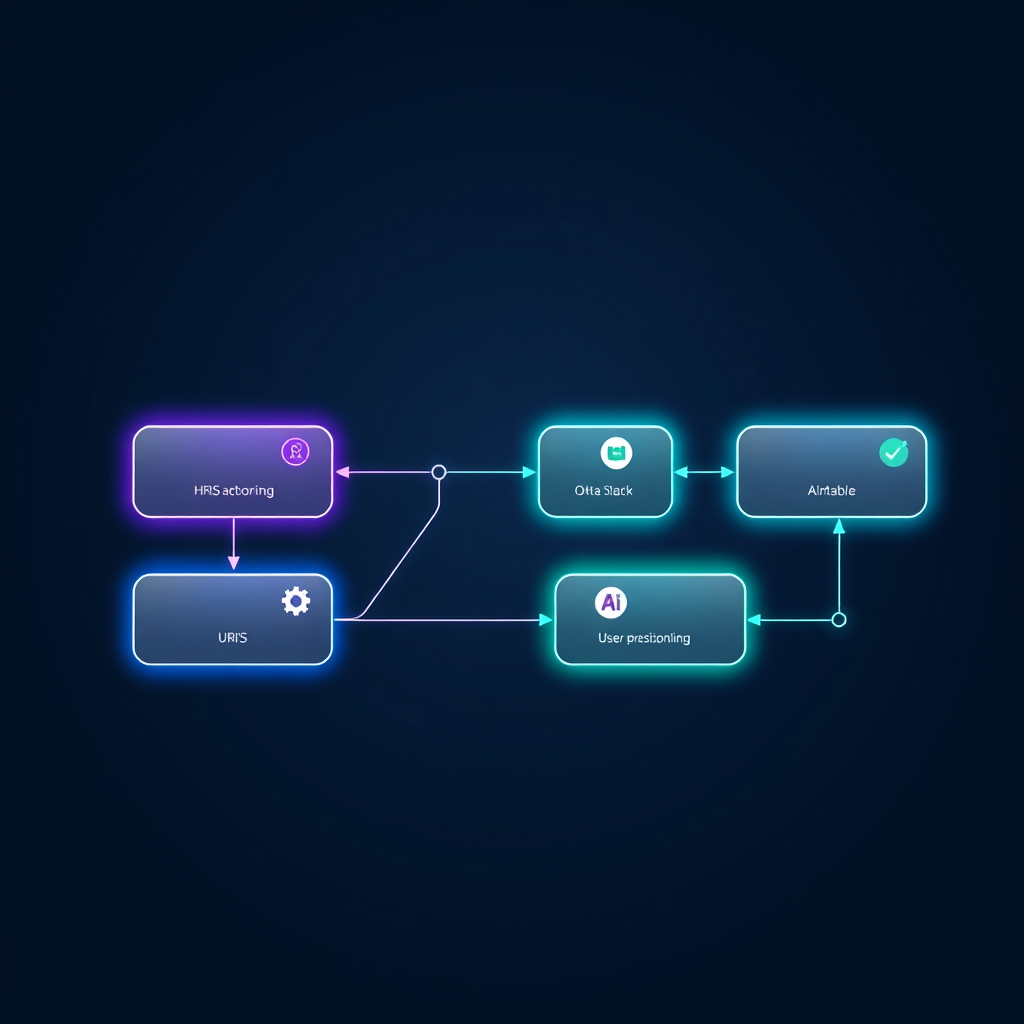
To build a truly scalable system, we moved away from manual triggers and toward an event-driven architecture. We utilized n8n as the central orchestration engine, acting as the middleware between the HRIS (Human Resources Information System) and the identity provider (Okta).
The Tech Stack
- Orchestration: n8n (Self-hosted for data sovereignty)
- Identity Provider: Okta
- HRIS: BambooHR (via REST API)
- Communication: Slack (for IT notifications)
- Audit Trail: Airtable
Step 1: The Trigger
We configured a webhook in the HRIS that fires whenever an employee status changes to 'Terminated' or 'Hired'. This payload is sent directly to an n8n webhook node. By using n8n’s native JSON handling, we can parse the employee metadata—department, role, and access level—in milliseconds.
Building the Automated Employee Offboarding and User Provisioning Workflow with n8n
When building an automated employee offboarding and user provisioning workflow with n8n, the logic must be bulletproof. You cannot afford a 'partial' offboarding where a user retains access to a sensitive database.
The Offboarding Logic
- Webhook Receipt: n8n receives the termination event.
- Data Enrichment: The workflow queries the HRIS API to pull the user's specific access profile.
- Okta Deactivation: Using the Okta REST API, the workflow triggers a 'Suspend' command for the user account.
- License Reclamation: The workflow iterates through secondary SaaS tools (like HubSpot or Salesforce) to remove the user from those specific seats, preventing 'zombie' licenses.
- Slack Alert: A notification is sent to the IT/Security channel with a summary of the actions taken.
- Logging: Every action is logged in an Airtable base for compliance and audit purposes.
The Provisioning Logic
Provisioning is the inverse. When a new hire is added, the workflow automatically creates the Okta user, assigns them to the correct groups based on their department (e.g., 'Sales' gets access to HubSpot, 'Engineering' gets access to GitHub), and sends a welcome message via Slack.
Why We Choose n8n Over Traditional iPaaS
Many teams try to solve this with rigid, expensive iPaaS platforms. We prefer n8n for three specific reasons:
- Self-Hosting: For security-conscious B2B firms, keeping data within your own VPC is non-negotiable. n8n allows us to deploy on AWS or DigitalOcean, ensuring sensitive employee data never leaves your infrastructure.
- Complex Logic: Unlike 'no-code' tools that break when you add a conditional branch, n8n handles complex JavaScript logic natively. We use this to handle edge cases, such as 'contractor' vs 'full-time' access levels.
- API Flexibility: If a tool doesn't have a native integration, we simply use the HTTP Request node. If it has a REST API, we can automate it.
Real Results: From Days to Seconds
Before we implemented this system, our client’s IT team spent roughly 4 hours per week manually provisioning and offboarding users. After deploying this automated employee offboarding and user provisioning workflow with n8n, that time dropped to zero.
More importantly, we identified $12,000 in annual recurring revenue (ARR) savings in the first 90 days by automatically reclaiming licenses from terminated employees. This is the power of treating your internal operations like a product.
Scaling Your Automation Strategy
Automation is not a 'set it and forget it' project; it is a continuous improvement cycle. Once you have your identity management under control, you can start layering in more advanced agentic AI workflows—like using LangChain to query your internal documentation or automating lead routing in HubSpot based on real-time team capacity.
If you are ready to stop the manual grind and build a system that scales with your company, we should talk. We specialize in building custom workflows that integrate your entire stack, from CRM to HRIS.
Book a Free Automation Audit with our engineering team today. Let’s look at your current stack and identify where you are leaking time and money.