

Automating Multi-Channel Order Fulfillment: Building a Custom Inventory Sync Engine with n8n and Shopify
Stop manual data entry and prevent overselling with a robust, scalable inventory sync engine built on n8n.
The Challenge of Multi-Channel Inventory
In the B2B e-commerce landscape, manual inventory management is a silent killer of growth. When you are juggling Shopify, a legacy ERP, and a handful of third-party marketplaces, the latency between a sale and an inventory update is where errors happen. Overselling leads to customer churn, while underselling ties up capital in dead stock. Implementing n8n and Shopify inventory sync automation for B2B e-commerce is no longer a luxury; it is a fundamental requirement for operational scale.
At Deepak Automation, we specialize in building custom middleware that bridges the gap between disparate systems. We don't just move data; we build resilient, self-healing pipelines that handle rate limits, API failures, and data normalization.
Why n8n for Inventory Orchestration?
While iPaaS platforms like Zapier are great for simple tasks, they often fall short when dealing with the complex logic required for B2B inventory. We prefer n8n for several engineering reasons:
- Self-Hosting Capabilities: You maintain control over your data and avoid per-execution costs that scale linearly with your order volume.
- Complex Logic Handling: With n8n, we can write custom JavaScript nodes to handle complex inventory calculations, such as safety stock buffers or lead-time adjustments.
- Error Handling & Retries: We build workflows with built-in error handling that alerts our team via Slack if an API call fails, ensuring no order goes unprocessed.
Architecture: Building the Sync Engine
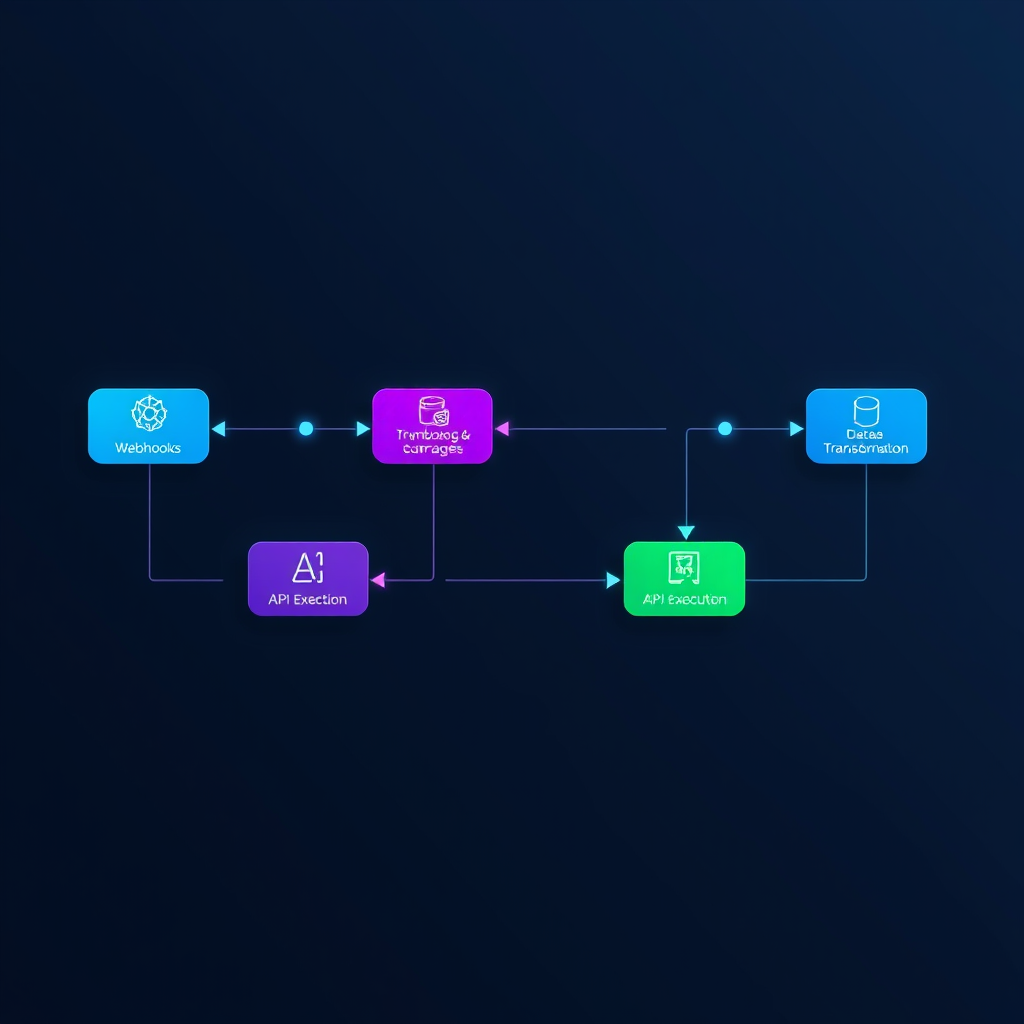
To build a robust sync engine, we move away from simple "trigger-action" flows and toward a state-based synchronization model. Here is how we structure our workflows:
1. The Data Ingestion Layer
We start by setting up webhooks in Shopify to listen for order/created and inventory_levels/update events. These webhooks push data into an n8n webhook node. We immediately validate the payload and store the raw event in an Airtable base or a dedicated SQL database. This acts as our audit log.
2. The Transformation Logic
This is where the magic happens. We use n8n's Function nodes to map Shopify SKU formats to your internal ERP or warehouse management system (WMS) identifiers. If you are using HubSpot to manage B2B customer tiers, we pull the customer's specific pricing and inventory visibility rules here, ensuring the sync respects your business logic.
3. The Sync Execution
We use the Shopify REST API or GraphQL API to push updates back to your storefront. By using GraphQL, we can perform bulk inventory adjustments in a single request, significantly reducing API overhead and staying well within Shopify's rate limits.
Case Study: Scaling a B2B Distributor
We recently worked with a mid-market distributor struggling with a 4-hour lag in inventory updates across their Shopify Plus store and their offline warehouse system. They were losing roughly 5% of their orders to overselling.
The Solution: We deployed a custom n8n workflow that triggers on every inventory change in their ERP. The workflow:
- Normalizes the SKU data.
- Checks the current stock level in Shopify via GraphQL.
- Calculates the delta.
- Updates Shopify only if the delta exceeds a specific threshold (to minimize API calls).
- Logs the transaction in a Google Sheet for the finance team.
The Outcome: Inventory sync latency dropped from 4 hours to under 30 seconds. Overselling incidents dropped to zero within the first month. By automating these Automation Services & Capabilities, the client was able to reallocate two full-time employees from manual data entry to high-value customer success roles.
Handling Edge Cases: The "Agentic" Approach
Modern automation isn't just about moving data; it's about intelligence. We are increasingly integrating OpenAI and LangChain into these workflows. For example, if an inventory sync fails due to a SKU mismatch, our n8n workflow now triggers an AI agent to analyze the error log, search the product catalog for a potential match, and suggest a fix to a human operator via Slack. This turns a "failed sync" into a "pending review" task, preventing data loss.
Ready to Automate Your Operations?
Building a custom inventory sync engine is about more than just connecting APIs; it is about building a foundation for your business to scale without breaking. If you are tired of manual syncs and the operational overhead of fragmented systems, it is time to talk to an expert.
Book a Free Automation Audit with our team today. We will review your current tech stack, identify the bottlenecks in your fulfillment process, and show you exactly how we can build a custom solution to solve them.
Visit our Blog for more deep dives into API automation and agentic AI workflows.